
How to Verify a Chinese Supplier Before Paying a Deposit: A 2026 Buyer’s Field Checklist
Most sourcing problems do not start at the container yard. They start much earlier, usually before the buyer sends the first deposit.
In 2026, importers are dealing with more tariff uncertainty, tighter delivery windows, and pressure to diversify suppliers without losing control of quality. That makes supplier verification less of a formality and more of a buying skill. A low unit price is useful only if the supplier is real, the product matches your market, and the order can actually be produced, packed, documented, and shipped.
This checklist is written for buyers who are preparing to place a first order with a Chinese supplier, especially for automotive parts, packaging, consumer electronics, furniture, bags, food-related products, and other export categories where small mistakes can become expensive.
1. Verify the supplier’s identity before discussing price too deeply
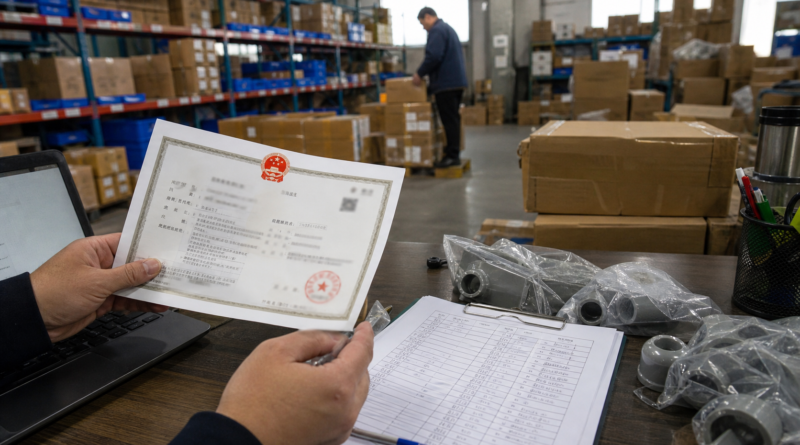
A serious supplier should be willing to provide basic company information before asking for a deposit. Ask for the business license, Chinese company name, registered address, unified social credit code, export license if applicable, and the name of the bank account that will receive payment.
The bank account name should match the legal company name or be clearly explained. If the supplier wants payment to a personal account, an unrelated trading company, or a new offshore account, slow down. It does not always mean fraud, but it does mean you need a written explanation and stronger checks.
2. Separate manufacturer, trading company, and “sales office” claims
Many buyers ask, “Are you a factory?” The better question is: “Which part of this order do you control directly?”
- If they are a factory, ask for workshop photos, production equipment, QC stations, and recent packing photos.
- If they are a trading company, ask which factories they cooperate with and what inspection control they provide.
- If they are a sourcing office, ask how they qualify suppliers and whether they can provide loading supervision.
A trading company is not automatically bad. In many categories, a strong trading company can coordinate multiple factories better than a single manufacturer. The real issue is transparency. You need to know who controls production, who controls quality, and who takes responsibility when something goes wrong.
3. Treat samples as a test of process, not only product quality
When you order samples, do not only check whether the product looks good. Watch how the supplier works:
- Did they confirm specifications clearly before making the sample?
- Did they label the sample with model, material, size, voltage, or batch details?
- Did they pack it in a way that reflects export shipping conditions?
- Did they provide test results, product photos, or a sample inspection note?
- Did they answer technical questions directly, or only reply with “yes, no problem”?
A sample is a small order, but it reveals the supplier’s discipline. If communication is already vague during the sample stage, the bulk order will usually be harder.
4. Ask for production evidence that matches your actual order
Generic factory photos are easy to prepare. Useful evidence is specific. Before paying a deposit, ask the supplier for examples that are close to your order: similar material, similar packaging, similar destination market, similar certification requirement, or similar container loading method.
For example, a buyer importing used automotive engines should not accept only a clean office photo. They should ask for engine source records, compression test or inspection notes where available, photos of engine codes, oil leakage checks, pallet packing method, and previous loading examples. A packaging buyer should ask for paper weight, print tolerance, carton compression expectations, and proof that export cartons can survive handling.
5. Confirm compliance before price negotiation goes too far
Many orders fail because the buyer and supplier discuss price first and compliance last. For regulated or semi-regulated products, confirm the destination market requirements early: labeling, test reports, safety standards, material restrictions, fumigation, food-contact rules, spare-parts documentation, or customs declaration details.
If the supplier says “we export to many countries,” ask which countries, under which product name, and with what documents. A supplier that has shipped to your target market before is usually easier to work with than one learning on your order.
6. Use a deposit only after the risk map is clear
A deposit is not just a payment. It is a transfer of leverage. Before sending it, make sure you have written confirmation of:
- Exact product specification and accepted sample version
- Quantity, tolerance, packaging, carton mark, and spare parts if any
- Production lead time and what happens if it is delayed
- Inspection timing and whether defects can be reworked before balance payment
- Payment account details matching the supplier identity
- Incoterms, loading port, required documents, and shipping responsibility
If the supplier pushes for deposit before these points are clear, it is a signal to pause. Good suppliers usually prefer clear orders too, because unclear orders create disputes.
7. Build a simple verification file for each supplier
Professional buyers keep supplier records. Even a small importer can do this with a simple folder. Save the business license, contact names, quotation versions, sample photos, inspection notes, payment account proof, packing photos, and final shipping documents.
This file becomes valuable when you reorder, compare suppliers, negotiate payment terms, or explain customs and quality issues to your own customer. It also helps you avoid depending on memory or chat history.
What GlobalSource.Click can help with
If you are comparing suppliers in China and want a second check before placing an order, GlobalSource.Click can help review supplier information, product category risk, document readiness, sample questions, packing details, and sourcing options. This is especially useful when the order involves multiple factories, used automotive parts, customized packaging, or a new destination market.
You can submit a sourcing request here: Submit Request. You can also contact us by WhatsApp: +86 188 5050 9900.
Quick buyer checklist before deposit
- Company identity checked
- Payment account verified
- Factory or trading role understood
- Sample approved with clear version record
- Compliance documents reviewed
- Packaging and loading method confirmed
- Inspection plan agreed before balance payment
- All key terms written in the proforma invoice
The safest supplier is not always the cheapest one. It is the supplier whose information can be checked, whose process is visible, and whose team can explain how your order will move from sample to shipment.
Market context used for this article: 2026 supply chain risk and tariff uncertainty reports from KPMG, Thomson Reuters trade commentary, and DHL’s trade and supply chain resilience materials.