
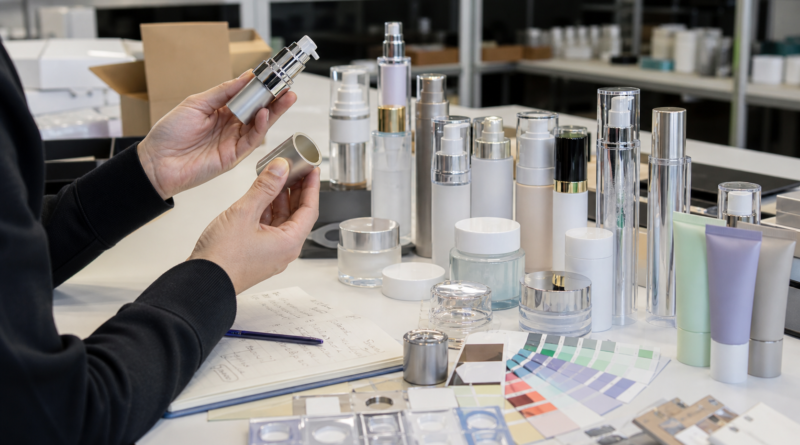
Cosmetic Packaging Suppliers in China: How Buyers Should Check Pump Performance, Material Claims, and Decoration Risk
Cosmetic packaging can make a product feel premium, but it can also create expensive launch delays. A pump that drips, a cap that loosens during transport, a decoration process that scratches too easily, or a material claim that cannot be documented can put a brand owner, distributor, or Amazon seller in a difficult position. When sourcing cosmetic packaging from China, buyers need to evaluate both the visual sample and the factory’s process control.
This guide focuses on airless pump bottles, lotion pumps, jars, tubes, caps, droppers, and decorated packaging used for skincare, personal care, and beauty products.
Define the formula before confirming the package
Packaging cannot be selected in isolation. Viscosity, alcohol content, essential oils, acids, UV sensitivity, fill temperature, and shelf-life expectations all affect material compatibility. A supplier may provide a beautiful sample, but the sample is not proof that the bottle, pump, liner, gasket, and decoration are suitable for your formula.
Buyers should share the relevant formula characteristics under NDA where needed, then request compatibility guidance. For new launches, conduct filling and storage tests with the actual formula before approving mass production. The test should include upright storage, inverted storage where relevant, high temperature, low temperature, leakage checks, and dispensing performance after repeated use.
Do not judge pumps by one sample press
Pump performance is one of the most common sources of complaints. Ask for output per stroke, priming strokes, leakage standard, spring material, closure torque, and expected cycle life. For airless pumps, confirm whether the supplier tests vacuum performance and piston movement. For lotion pumps, check whether the dip tube length is suitable for the bottle and whether trimming is controlled consistently.
Buyers should test at least several pieces from different cavities or production batches, not only one hand-selected sample. If your product sells online, leakage during courier handling should be treated as a real use case, not an exception.
Material claims need documentation
PCR plastic, recyclable mono-material packaging, glass alternatives, and “eco” claims are increasingly common in quotations. The commercial value of these claims depends on documentation. Ask for material data sheets, PCR content certificates where applicable, food-contact or cosmetic-contact declarations, and any market-specific compliance information required by your destination country.
Buyers should be careful with broad sustainability language. A supplier saying “30% PCR available” is different from proving PCR content for your exact order. If your brand prints environmental claims on the label or listing, your internal compliance standard should be stricter than a casual supplier statement.
Decoration risk: color, adhesion, and repeatability
Spraying, silk screen printing, hot stamping, metallization, labeling, and in-mold decoration all have different failure points. A perfect pre-production sample does not guarantee that thousands of pieces will match. Buyers should set clear standards for color tolerance, logo position, scratch resistance, tape test, rub test, and acceptable minor defects.
For transparent or metallic packaging, small scratches and dust are more visible. For matte finishes, oil marks and handling scratches can create complaints. Ask how the supplier handles clean-room requirements, dust control, drying time, and protective packing after decoration.
Tooling and MOQ questions
If the project needs a custom mold, clarify tooling cost, cavity count, lead time, ownership, maintenance, and whether mold drawings are available. For standard packaging, confirm whether the “standard” mold is truly stable and whether the supplier can reserve capacity for repeat orders. A standard bottle that disappears after the first purchase can create a brand continuity problem.
Also compare MOQ by component. The MOQ for bottles, pumps, caps, sprayers, cartons, and decoration may differ. A low bottle MOQ can become misleading if the pump color or metallized cap requires a much higher minimum.
Factory audit points
- Review incoming material control for resin, glass, pumps, springs, liners, and decoration materials.
- Check whether the supplier records pump output, leakage, torque, and visual defects during production.
- Inspect sample retention: the factory should keep approved samples and batch references.
- Confirm packing method for decorated surfaces, especially matte, glossy, and metallic finishes.
- Ask how nonconforming goods are isolated and whether rework is traceable.
When the lowest price is risky
A cheaper cosmetic package can be acceptable if it meets the functional standard. It becomes risky when the price reduction comes from thinner walls, unstable pump components, low-grade decoration, weak cartons, or undocumented material substitution. Buyers should compare total launch risk, not only the FOB unit price.
GlobalSource.Click can help buyers verify suppliers, compare sourcing options, arrange checks, or submit sourcing requests. Contact via Submit Request or WhatsApp: +86 188 5050 9900.