
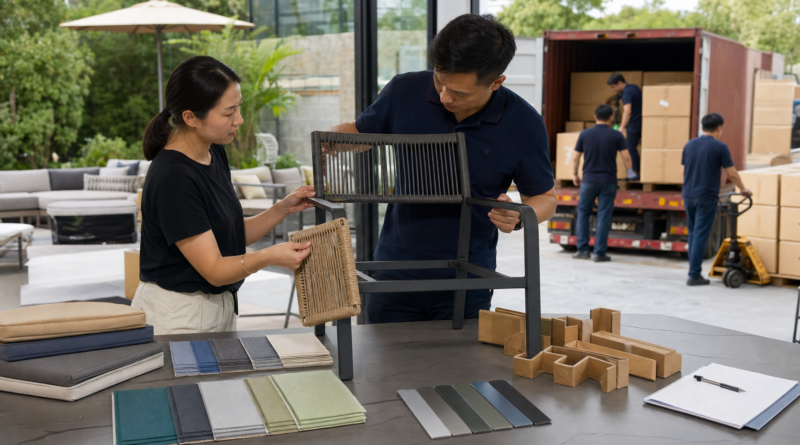
Outdoor Furniture Suppliers in China: How Importers Should Check Weather Resistance, Frame Quality, and Export Packing
Outdoor furniture is difficult to source well because customers judge it twice: first when it arrives, and again after a season of sun, rain, salt air, and daily use. A chair can look good in a supplier showroom but fail in the market because of weak welding, poor powder coating, fading fabric, brittle rattan, or cartons that do not survive container transport.
For importers, retailers, hotel buyers, and e-commerce sellers, the goal is not only to find an outdoor furniture supplier in China. The real goal is to find a factory that can control weather resistance, comfort, packing volume, seasonal delivery, and after-sales claims at the same time.
Match the supplier to the product type
Outdoor furniture covers many production skills. Aluminum frame sofas, steel patio sets, rope chairs, woven rattan collections, teak combinations, umbrellas, and KD dining sets do not come from the same capability base. A factory strong in welded aluminum frames may outsource cushions. A rattan furniture factory may not control powder coating in-house.
Before comparing prices, map the bill of materials and ask which processes are done internally. Key points include tube cutting, bending, welding, polishing, powder coating, weaving, cushion sewing, fabric sourcing, packing design, and loading. If too many processes are outsourced without control records, quality risk rises.
Frame and coating checks
The frame is the first risk area. For aluminum furniture, check tube thickness, alloy grade, weld smoothness, and whether sharp edges are removed before coating. For steel furniture, corrosion protection is even more important. Ask about pretreatment, coating thickness, salt spray test references, and how the factory protects joints and hidden areas.
Do not approve a frame only by looking at a finished sample. Ask to see raw frame photos, welding points, polishing before coating, and cross-section details where possible. If the supplier cannot maintain consistent welding and coating, claims will appear after the goods are already in the buyer’s warehouse.
Fabric, cushion, and rattan questions
Outdoor cushions create many customer complaints. Buyers should define foam density, fabric weight, water resistance, UV performance, zipper quality, and whether cushion covers are removable. For high-end channels, ask for colorfastness and abrasion test references. For humid markets, discuss mildew risk and storage instructions.
For PE rattan or rope furniture, request material specifications and UV resistance claims. Compare sample flexibility and color consistency. Low-grade weaving material may look acceptable at shipment but become brittle or faded after outdoor exposure. For repeat orders, keep approved material swatches and color chips signed and dated.
Export packing matters more than many buyers expect
Outdoor furniture is bulky, mixed-material, and easy to scratch. Poor packing can turn a good product into a high-claim shipment. Review carton strength, corner protection, hardware bags, assembly instructions, and how glass, tabletops, cushions, and metal frames are separated. E-commerce cartons need different protection from bulk retail cartons.
Ask the supplier to run a packing trial before mass production. Confirm carton dimensions, gross weight, stacking method, and container loading plan. If the product is knock-down, test assembly using only the supplied hardware and instructions. Missing bolts, unclear diagrams, or misaligned holes will create expensive customer service issues.
Inspection checklist before shipment
- Check frame dimensions against the approved drawing.
- Inspect welds, coating surface, scratches, dents, and exposed metal.
- Confirm cushion fabric, color, thickness, foam feel, and zipper quality.
- Review rattan or rope tension, color consistency, and end finishing.
- Assemble random units from packed cartons, not only showroom samples.
- Check carton drop risk, corner protection, and hardware bag labeling.
- Verify carton marks, SKU separation, and loading photos before shipment release.
Seasonal capacity and reorder risk
Outdoor furniture demand often peaks before spring and summer selling seasons. Buyers should not judge capacity from a quiet-season factory visit. Ask about peak-season lead time, material booking, cushion fabric availability, and whether the supplier reserves capacity for major customers. If a factory accepts too many orders before the season, late delivery can be more damaging than a small price increase.
For retailers and online sellers, reorder consistency matters. Keep golden samples, signed color swatches, approved packing photos, and inspection standards. This gives both buyer and supplier a clear reference when repeat orders are produced months later.
Buying advice
A strong outdoor furniture supplier will talk openly about frame construction, coating, fabric, packing, and claim prevention. A weak supplier will focus mainly on catalog photos and FOB price. Buyers should slow down during sample approval, because most preventable problems are visible before the first container ships.
GlobalSource.Click can help buyers verify outdoor furniture suppliers, compare sourcing options, arrange checks, or submit sourcing requests. Contact via Submit Request or WhatsApp: +86 188 5050 9900.