
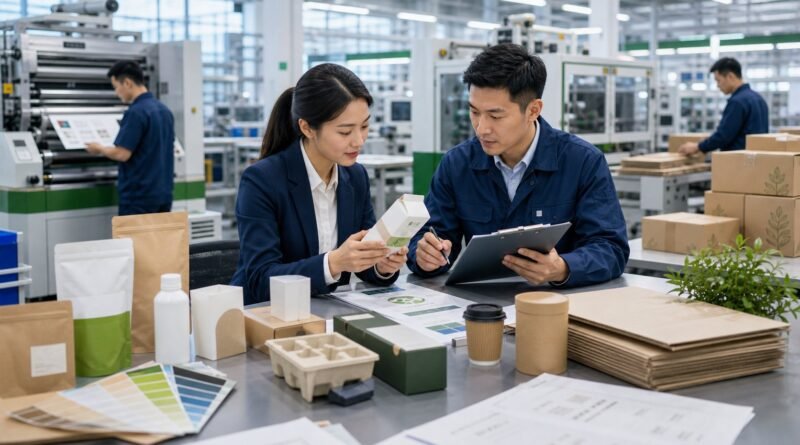
Stand-Up Pouch Suppliers in China: What Food Brands Should Verify Before Ordering Printed Packaging
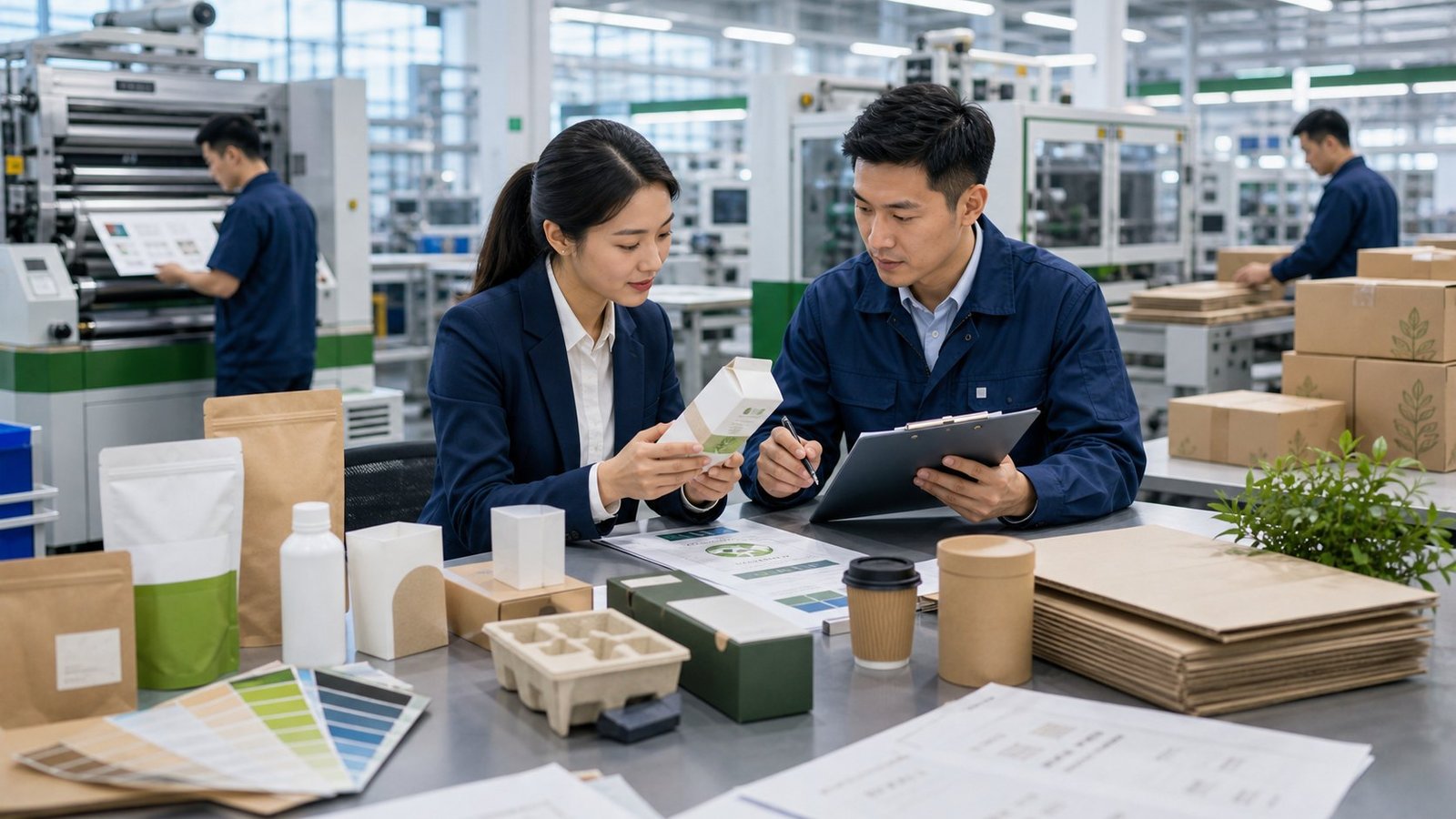
Printed stand-up pouches are one of the fastest ways to upgrade shelf appeal and lower shipping weight, but they are also one of the easiest packaging categories to get wrong. A pouch that looks good in a sample photo can still fail in sealing strength, barrier performance, zipper quality, or print color consistency once mass production starts.
For food brands, importers, and private label buyers sourcing from China, the real question is not simply who can print a pouch. It is who can supply the right material structure for your product, keep color and dimensions stable across runs, and deliver documentation you can actually use with your co-packer or regulatory team.
Know what the pouch has to protect
Suppliers cannot recommend the right structure if the buyer only says “we need a matte stand-up pouch.” The pouch design has to match what goes inside it. Dry snacks, coffee, nutraceutical powders, pet treats, frozen ingredients, and liquid concentrates all behave differently.
Before quoting, define:
- Product type and fill weight
- Shelf-life target
- Filling process: manual, semi-automatic, or automatic
- Need for zipper, spout, valve, tear notch, or window
- Storage environment: ambient, chilled, or frozen
- Target market labeling requirements
This changes the recommended film structure, sealing layer, and print approach. Buyers who skip this step often receive quotes that are not comparable.
Material structure is where the real sourcing risk sits
Many first-time buyers compare pouch offers by unit price and thickness alone. That is not enough. A 120-micron pouch made from one laminate combination may perform very differently from another 120-micron pouch built with cheaper layers.
Ask the supplier to specify:
- Exact layer structure, for example PET / VMPET / PE or Kraft / PET / PE
- Whether the pouch is suitable for direct food contact
- Expected barrier performance for oxygen and moisture
- Whether inks, adhesives, and films match your application
- Whether the structure has already been used for similar products
If your product is sensitive to moisture, aroma loss, grease, or oxidation, ask for technical data rather than relying on general promises. Good suppliers can explain why they recommend one structure over another.
Printed packaging problems often show up after approval
Food brands usually focus on the first printed sample, but bulk production is where variation becomes visible. Common issues include shifted registration, weak white layers under color, inconsistent matte finish, zipper mismatch, pouch size drift, and sealed edges that look clean but fail under pressure.
To reduce print risk, confirm:
- Artwork format and prepress workflow
- Color approval process and Pantone matching policy
- Printing method: rotogravure or digital
- Whether the supplier provides a production proof or mock-up
- What tolerances apply to dimensions, color variation, and pouch weight
Do not approve production based on a compressed chat image. Ask for a physical print sample if the order is commercial, especially for retail packaging.
MOQs, cylinders, and hidden packaging costs
Printed pouch pricing can look attractive until the buyer discovers plate or cylinder costs, design change charges, extra sealing tests, or higher MOQs for each SKU version. This becomes painful for brands with many flavors or multiple label languages.
Before placing an order, verify:
- MOQ per design and per size
- Cylinder or plate cost and whether it is reusable for repeat runs
- Lead time for first order and for replenishment
- How mixed SKUs affect price
- Whether the supplier can support version control for artwork changes
For small and mid-sized brands, the most usable supplier is often not the cheapest one, but the one that can manage multiple SKUs without operational confusion.
Factory checks buyers should not skip
Stand-up pouches are sold as packaging, but sourcing risk sits in process control. Buyers should assess whether the factory actually controls lamination, curing, slitting, pouch forming, and sealing integrity.
A practical factory checklist includes:
- Raw material traceability
- Food-contact compliance files for films and inks
- In-house or outsourced testing capability
- Cleanliness of storage and work areas
- Batch coding and retention sample practice
- Complaint handling and reprint policy
If the factory cannot explain how it isolates print defects or sealing complaints by lot, buyers should be cautious.
Before final payment: the buyer’s pouch inspection checklist
- Measure pouch dimensions and gusset accuracy
- Check seal strength and zipper repeatability
- Review print registration, color uniformity, and matte/gloss finish
- Confirm inner layer cleanliness and odor level
- Verify carton packing, count, and moisture protection
- Match shipping marks and SKU labels with the PO
This is especially important if the pouches are heading straight to a co-packer or retailer. A packaging delay can stop a product launch even when the food itself is ready.
Bottom line for overseas buyers
When sourcing printed stand-up pouches from China, the right supplier is the one that understands your product application, explains material structure clearly, manages print consistency, and responds well to version changes and repeat runs. Buyers should think like operators, not just purchasers: what matters is whether the pouch will run cleanly, protect the product, and arrive market-ready.
That is why a structured supplier check, a real production proof, and a final inspection matter more than a low initial quote.
Need support on shortlisting or verifying suppliers? GlobalSource.Click can help buyers verify suppliers, compare sourcing options, arrange checks, or submit sourcing requests. Contact via Submit Request or WhatsApp: +86 188 5050 9900.