
Chemical Raw Material Suppliers in China: A Procurement Guide to COA Accuracy, SDS Review, Batch Consistency, and Export Risk
Sourcing chemical raw materials from China can be efficient, but the risk profile is different from ordinary consumer goods. A wrong specification, incomplete safety document, unstable batch, or export classification mistake can delay customs clearance, disrupt production, and expose the buyer to regulatory problems in the destination market.
Many overseas buyers focus first on price per kilogram. That matters, but the stronger question is whether the supplier can control identity, purity, contaminants, packaging, documentation, and shipping conditions from one batch to the next. This procurement guide explains how to review Chinese chemical raw material suppliers before approving commercial orders.
Define The Material Before Comparing Prices
Begin with an exact technical requirement. A chemical name alone is not enough. Buyers should confirm CAS number, grade, assay range, impurity limits, moisture, particle size, viscosity, color, odor, heavy metals, microbiological limits if relevant, and the intended application. If the material will be used in food contact, cosmetics, coatings, adhesives, cleaning products, agriculture, electronics, or pharmaceuticals, the compliance path changes.
Ask the supplier whether they are the manufacturer, trader, distributor, or export agent. A trader can be useful, but they must still show traceability to the producing plant and explain who controls batch release. For critical materials, request the factory name on the certificate of analysis and check whether the facility has experience with your destination market.
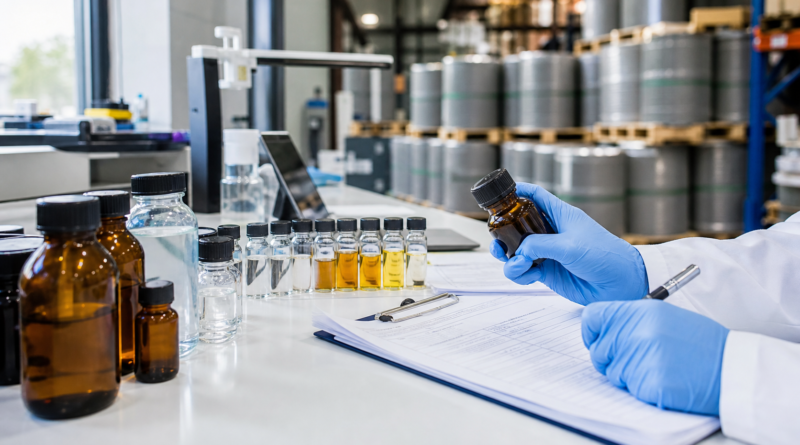
COA Review: What Buyers Should Check
A certificate of analysis should not be treated as a decorative document. It should match the exact batch number, production date, test method, specification limit, and actual result. Watch for COAs that show only broad statements such as “qualified” or values copied across many batches. If the supplier sends a COA before production, clarify whether it is a previous batch sample or a promised future format.
Useful COA checks include:
- Does the batch number match the sample label and packing list?
- Are test methods named clearly, such as GC, HPLC, titration, Karl Fischer, or ICP where appropriate?
- Are impurity limits realistic for the grade being sold?
- Are results too perfect or identical across unrelated batches?
- Is the COA issued by the producer, internal lab, or third-party lab?
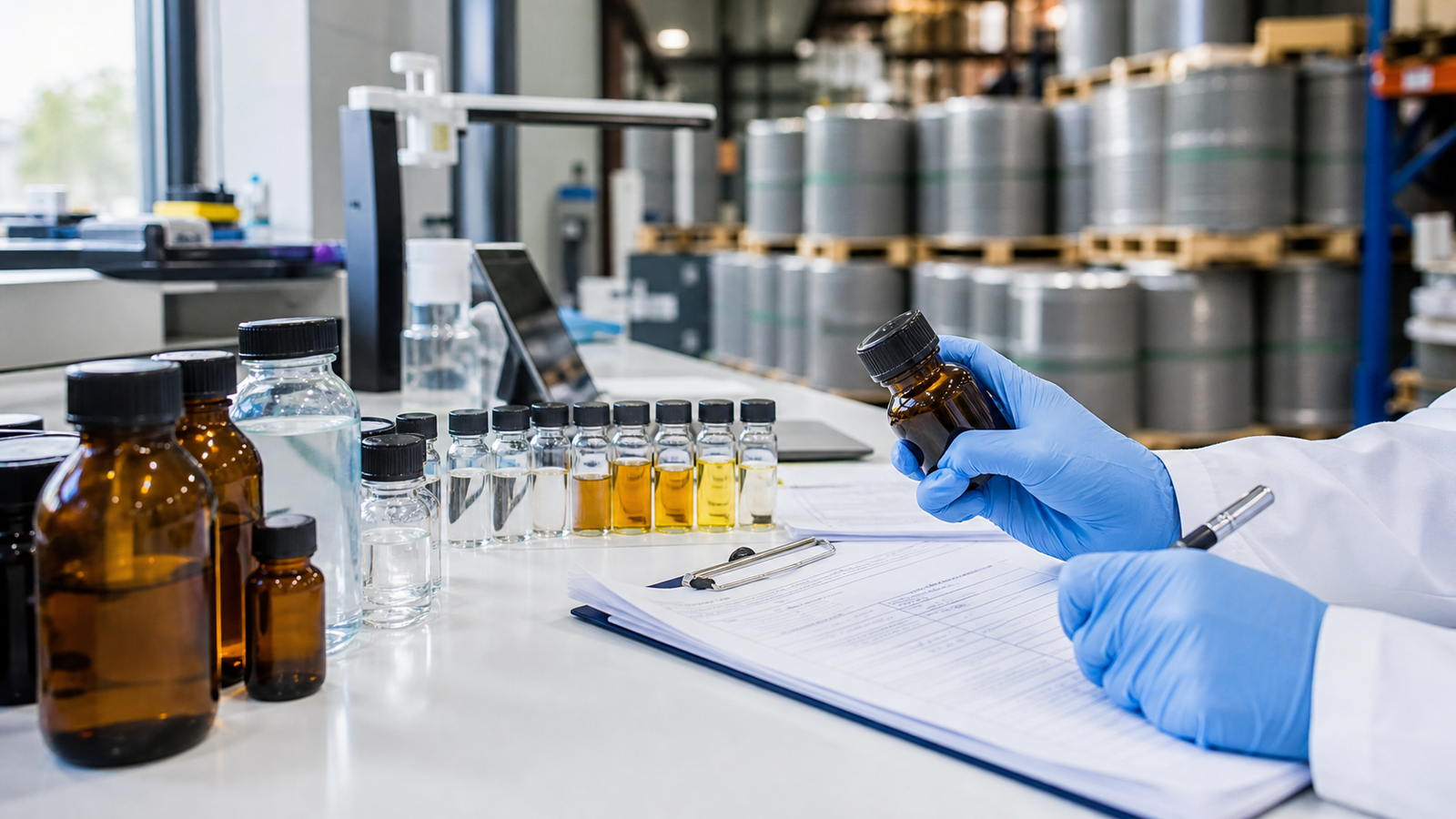
For higher-risk materials, buyers should arrange pre-shipment sampling and independent lab testing. The cost is often small compared with production losses caused by unsuitable raw materials.
SDS And Compliance Documents
The safety data sheet must be current, consistent with the material, and aligned with the export classification. Check the product identifier, hazard classification, transport information, emergency measures, storage guidance, and regulatory references. If the SDS is generic or has another company’s name hidden inside the document, ask for clarification before shipping.
For dangerous goods, confirm UN number, packing group, hazard class, limited quantity rules, and carrier acceptance. For non-dangerous goods, ask whether the supplier can provide a non-hazardous transport certificate when required. Documentation gaps can lead to booking delays, rejected cargo, or customs questions.
Batch Consistency And Retained Samples
The first sample may come from a stable batch, but future orders need the same discipline. Ask how the supplier manages raw material input, production records, retained samples, re-test periods, and shelf-life controls. If your process is sensitive to color, odor, particle size, moisture, or viscosity, include those acceptance criteria in the purchase order.
For repeat orders, keep your own control sample and compare each shipment. Buyers should also request photos of labels, drum seals, pallet condition, and container loading. This creates evidence if quality or leakage problems appear after arrival.
Packaging And Shipping Risk
Chemical packaging must match the material and route. Confirm inner liner, drum type, net weight per unit, palletization, sealing method, desiccant needs, temperature sensitivity, and whether the packaging is suitable for sea freight. Leakage, odor transfer, caking, or moisture absorption can turn an acceptable product into a rejected shipment.
For powders and hygroscopic materials, check whether the supplier uses double PE liners, vacuum packing, foil bags, or moisture-proof drums. For liquids, check cap torque, induction seal, leak test, and drum compatibility. For corrosive or solvent-based materials, packaging compatibility is not optional.
Red Flags In Supplier Communication
Be careful when a supplier avoids technical questions, refuses to share batch-specific documents, cannot explain test methods, or pushes quick payment before confirming export requirements. Another warning sign is a price that is far below market without a clear reason. In chemicals, a low price may indicate lower purity, alternative origin, near-expiry material, recycled material, or documentation risk.
A Practical Buyer Workflow
Use a staged process: technical specification, supplier identity check, document review, sample test, small trial order, pre-shipment inspection, and retained-sample comparison. Keep written approval records at every step. The stronger your specification, the less room there is for misunderstanding when production begins.
Need support verifying chemical suppliers? GlobalSource.Click can help buyers verify suppliers, compare sourcing options, arrange checks, or submit sourcing requests. Contact via Submit Request or WhatsApp: +86 188 5050 9900.