
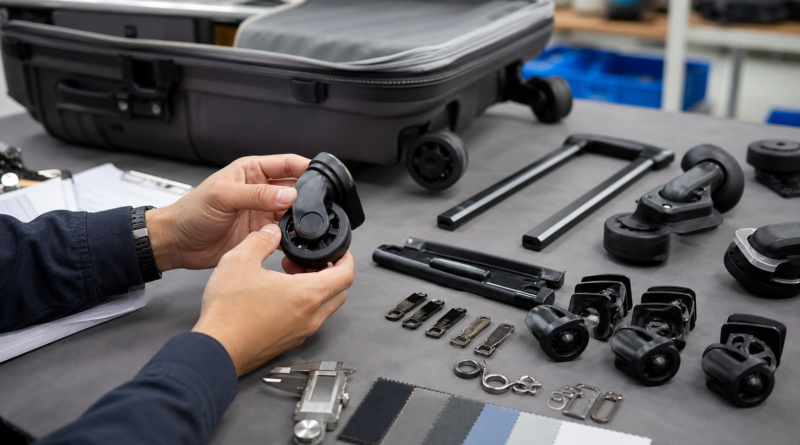
Luggage Hardware Suppliers in China: How Buyers Should Check Wheels, Handles, Zippers, and Transit Failure Risk
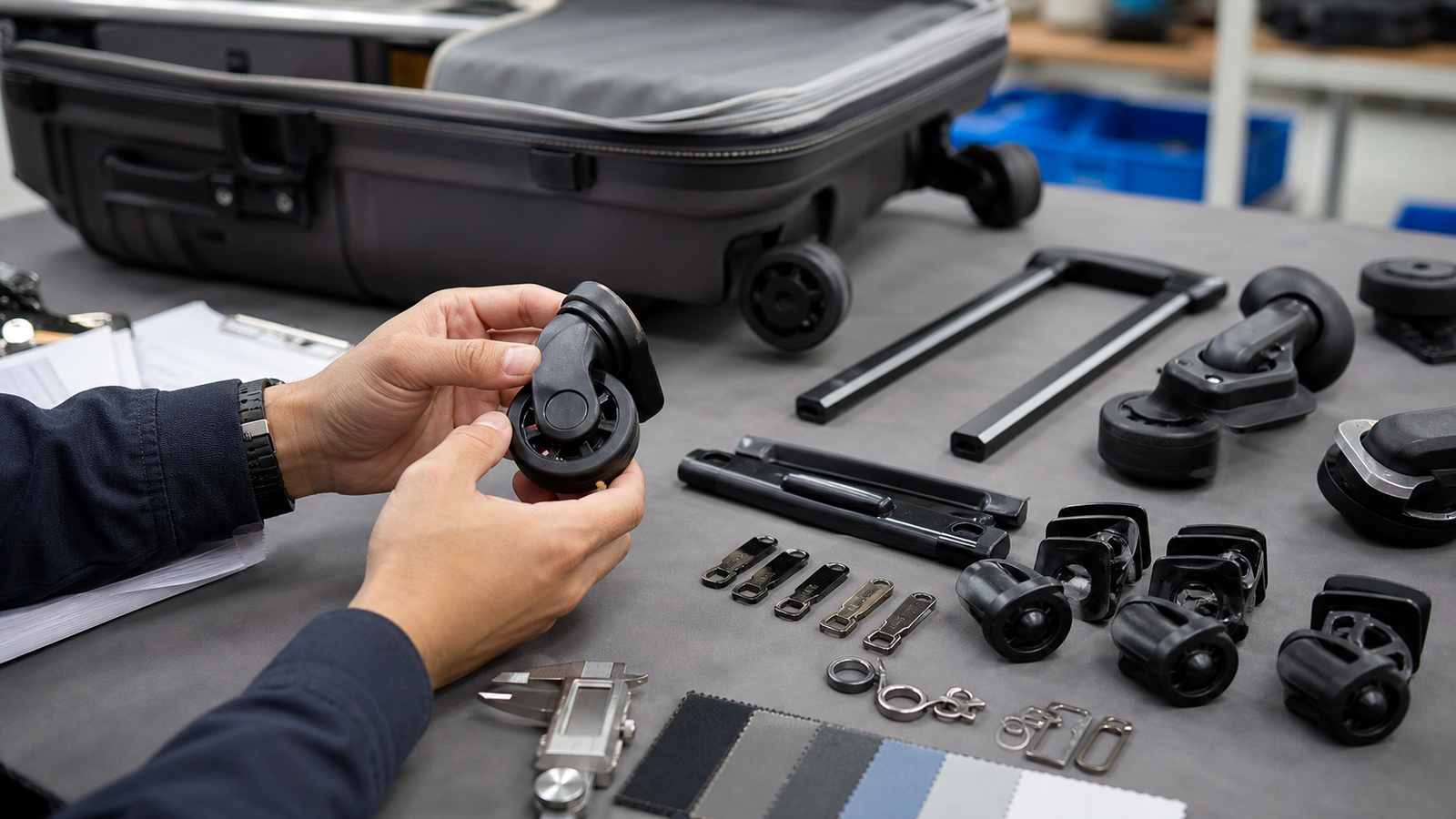
For many importers, luggage failures do not start with the shell. They start with a wheel that locks after two airport transfers, a telescopic handle that bends under load, a zipper puller that snaps in winter weather, or a carton that arrives crushed after container stacking. The visible product may look acceptable in a sample room, while the parts that control returns are hidden inside the bill of materials.
When sourcing luggage hardware suppliers in China, buyers need to check more than unit price and catalog photos. The right supplier should be able to explain component grade, assembly method, test standards, spare part policy, and how they control mixed materials across repeat orders. This guide gives overseas buyers a practical way to compare suppliers before placing a production deposit.
Start With The Real Failure Points
A luggage factory may show a good-looking suitcase, but the buyer should separate the inspection into key hardware systems:
- Wheels: wheel housing material, axle strength, rotation smoothness, noise, abrasion resistance, and replacement access.
- Telescopic handles: tube thickness, lock button strength, wobble tolerance, salt spray resistance, and cycle test records.
- Zippers: chain type, puller plating, slider smoothness, burst resistance, and whether the supplier uses the same zipper source for bulk production.
- Corner guards and feet: impact resistance, screw fixation, and whether they protect the shell during drop tests.
- Locks and accessories: TSA lock authenticity, reset reliability, plating, and instruction consistency.
Ask the supplier to identify which parts are made in-house and which are purchased from component vendors. A factory that cannot name its wheel, zipper, or handle sources may struggle to control quality when orders increase.
Questions To Ask Before Sampling
Before paying for samples, ask for a component specification sheet rather than a simple quotation. It should list shell material, lining density, wheel material, handle tube material, zipper brand or grade, lock type, carton structure, and expected test standards. If the supplier only replies with photos and FOB prices, the buyer has not yet received enough data to compare offers.
For hard-shell luggage, clarify whether the shell is ABS, PC, PP, or a blended material. For soft luggage, ask about fabric denier, backing, color fastness, and coating. Hardware selection should match the product position. A low-cost promotional suitcase and a mid-range travel brand cannot use the same wheels and handle system without different return risk.
Sample Testing Checklist
Do not approve a luggage supplier based on appearance alone. A basic buyer-side sample check can include:
- Roll the suitcase with load on tile, carpet, and uneven surfaces, then check wheel looseness.
- Pull the telescopic handle repeatedly at full extension and check wobble after stress.
- Open and close the zipper quickly around corners, especially when the suitcase is filled.
- Load the product to realistic travel weight and lift from top and side handles.
- Check screw points, rivets, and inside lining after simulated impact.
- Measure carton dimensions and calculate container loading efficiency.
For higher-value programs, request factory test videos or third-party testing for handle cycling, wheel abrasion, drop test, vibration, and salt spray. The test method should be written into the purchase order, not discussed casually in chat.
How To Compare Supplier Quotes
When one supplier is 8-12% cheaper, buyers often assume the difference is labor or margin. In luggage, it is often hardware grade, shell thickness, lining density, zipper quality, carton strength, or inspection effort. Ask each supplier to quote against the same component sheet. If possible, request a costed alternative: standard wheel versus silent wheel, normal zipper versus higher burst-strength zipper, single-wall carton versus stronger export carton.
Also check whether spare parts can be shipped with the order. Wheels, handles, locks, and pullers are low-cost items that can reduce after-sales pressure for distributors and online sellers. A supplier that supports spare parts is often more mature than one that only ships finished goods.
Production And Packing Risks
Luggage is bulky, and logistics mistakes can erase a small unit-price saving. Confirm nested packing method, carton compression strength, master carton labeling, barcode placement, humidity control, and container loading photos. Ask whether the factory has experience with your destination market’s retail packaging, drop-test expectations, and online marketplace carton requirements.
During production inspection, check hardware against the approved sample, not just the finished suitcase appearance. Component substitution is a common risk when suppliers face cost pressure. Wheels may look similar but use weaker housing. Handles may feel acceptable at first but fail after repeated extension. Zippers may be replaced with a lower-grade chain that increases warranty claims later.
When To Reject A Supplier
Be cautious when a luggage supplier refuses to disclose component details, cannot provide test records, changes hardware during sampling without approval, or promises any target price without explaining material changes. Also avoid suppliers that quote very low prices but cannot show export packing experience. For luggage, the cost of returns and customer complaints is usually higher than the saving from weak parts.
Practical Next Step
Build a comparison table with price, component specification, test evidence, sample result, packing method, lead time, and spare part support. Use that table before negotiating price. The best luggage hardware suppliers in China are not always the cheapest, but they can prove why their wheels, handles, zippers, and packing will survive real transit.
Need help shortlisting luggage and bag suppliers? GlobalSource.Click can help buyers verify suppliers, compare sourcing options, arrange checks, or submit sourcing requests. Contact via Submit Request or WhatsApp: +86 188 5050 9900.